.svg)
North York: City Connections and Residential Neighbourhoods



Book a strategy session

.svg)

.svg)
.svg)
Who is the best real estate agent in North York?
For North York, look for an agent who narrows the regional search to specific streets, housing forms and budgets. Ask for separate evidence for houses, townhouses and condos, with a review of condition or building obligations. A regional average should not decide the value or suitability of an individual property.
Three Property Questions to Ask Before Choosing an Agent
- Which North York search should come first? Use your actual destinations, housing needs and full budget to identify candidate pockets. Then compare specific addresses rather than treating the region as a single neighbourhood.
- How should an infill or renovation prospect be evaluated? Investigate the lot, records, systems and proposed work with the appropriate professionals. A nearby project does not establish permission, cost or value on this property.
- What makes a condo alternative worth considering? Compare usable space, fees, planned work and daily responsibilities with the house budget. The decision should reflect what you need and can carry over time.
Apply these questions when you speak with me. I’m Shen Walji. Review my buyer representation and seller services, and verify registration with RECO. Discuss the services, fees, communication and representation terms before committing.
North York: Buying and Selling Considerations
Assess the home, the exact location and the full cost before deciding whether to buy or sell. The useful comparison is between properties that fit your needs, with evidence you can examine.
I help buyers and sellers review comparable sales, property questions, preparation and negotiation. Your priorities and the facts of the property guide the strategy.
Establish a property-specific price range
A neighbourhood average or an undated price band cannot establish the value of a particular home. Compare relevant recent sales and current competition for the same housing type, then review the meaningful differences in condition, layout, lot, parking and ownership costs.
For broader context, review my Toronto market insights alongside the property-specific sales evidence.
Walking, transit and cycling conditions vary by street and address. Neighbourhood scores are general reference points. Check the routes, service and conditions for the exact property before making a decision.
Housing stock and property-type fit
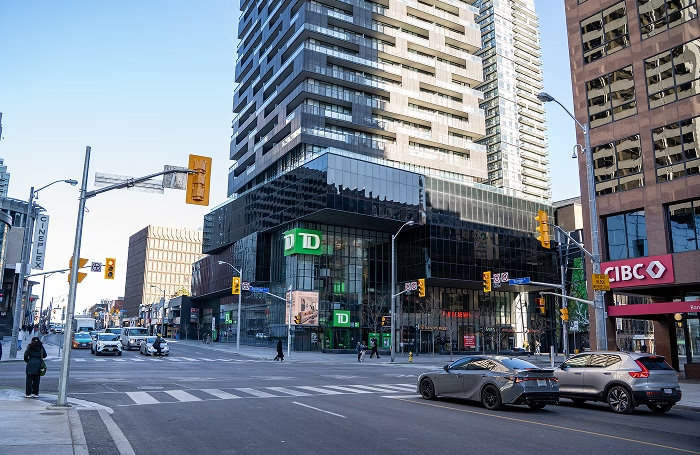
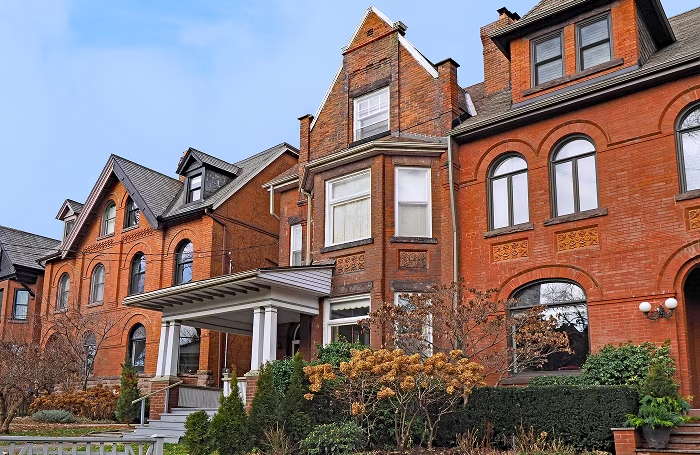
Housing stock in North York spans almost every form available in Toronto. The Yonge corridor from Sheppard to Finch is dominated by high-rise condos, many built in the 1980s to 2000s, with a growing new-build layer. Moving east or west off Yonge, the stock transitions to postwar detached and semi-detached housing from the 1950s to 1970s, typically brick construction on 40 to 50 ft lots. The prestige tier (York Mills, St. Andrew-Windfields, Bridle Path) shifts to large custom estates on lots of half an acre and above, with Bridle Path running 2 to 4 acres. Don Mills, as Canada's first planned community from the 1950s, offers a distinctive grid of bungalows and splits on generous lots at relative value compared to the Yonge spine. The buyer fit question is therefore not "should I buy in North York" but "which housing form and sub-pocket matches my budget, commute logic, and lifestyle?"
Assess current competition and evidence
Compare relevant completed sales with current alternatives for the same property type and location. Review condition, layout, costs, time on market and any price changes. Different houses and condominium buildings can face different conditions within the same area.
A claim that an area has strong demand, moves quickly or attracts a particular buyer pool needs current supporting evidence. I review the evidence for the actual property before recommending a price or offer strategy.
Match the property to your priorities
Start with your budget, preferred housing type, space, access, parking and regular destinations. Test those needs at the exact property. People with similar ages, jobs or household structures can have different priorities, so an area label cannot establish who should buy here.
Verify school eligibility for the exact address
Confirm the designated school, program requirements, application process and current availability with the appropriate school board for the exact address. Being nearby does not guarantee admission, and a neighbourhood name does not establish a catchment.
For Toronto public-school research, start with TDSB school information. Confirm requirements directly for other boards and independent schools.
Community services and personal priorities
Choose the facilities and services that matter to you, then verify their location, opening times, accessibility and route from the specific home. These might include community centres, groceries, places of worship, language services or support for relatives.
A demographic summary does not determine whether a home or neighbourhood is right for an individual. I base property comparisons on the priorities you choose, your budget and the actual home, rather than assuming where someone belongs.
Grocery, lifestyle, and daily-use anchors
Choose the shops and services you actually use, then verify the route, current hours and accessibility from the property. Visit at a useful time and include deliveries, parking or carrying groceries in the comparison. A neighbourhood retail description does not establish the experience at every address.
Test the actual route and current service
Plan travel from the exact address to the places you regularly use. Include walking, transfers, waiting, parking and the trip home. Test your usual travel time and check current service notices; a neighbourhood-wide minute estimate is not a door-to-door guarantee.
Check the TTC trip planner and GO Transit trip planning where relevant. Future projects should be distinguished from service available today.
Parks, trails, recreation, and outdoor use
Check the location, facilities and current access for the outdoor places you intend to use. The City of Toronto park listings are a starting point. Test the actual walking route and consider crossings, grade and seasonal conditions rather than assuming every nearby park is equally convenient.
Investigate risk at the specific property
Do not infer that a property has low environmental or infrastructure risk from its neighbourhood name. Review drainage, basement history, slope or ravine conditions, nearby roads or rail, construction and the building's condition as relevant. Visit at different times and obtain appropriate inspection, insurance and legal advice.
The TRCA flood plain map viewer can be a starting point within its coverage. A map result does not replace property-specific advice or confirm every flood, erosion or insurance issue.
Better alternatives, substitution, and affordability strategy
Compare this location against the facilities and routines you choose. Verify the actual property, service availability, route and costs rather than drawing conclusions from demographic descriptions.
Plan for more than one market outcome
No neighbourhood guarantees appreciation, price stability, a quick sale or a particular rental return. Compare the purchase with a flat or lower resale result, higher costs and a longer holding period. Transit, amenities and limited supply can matter, but do not establish a guaranteed investment outcome.
For a purchase or sale, I can explain the relevant comparables, property questions and negotiation options. The plan should fit your resources, timeline and intended use.
Planning a purchase in North York? My buyer representation explains how I help assess properties and prepare an offer strategy.
For a sale, explore my seller services to plan preparation, pricing and negotiation. An initial home value estimate needs a review of condition and comparable sales before deciding on a price.
Additional property comparisons: Bayview Village, Shops at Don Mills. Compare the actual address, costs and needs in each location.
Explore Specific Property Searches
These guides examine housing and move-planning questions that may help when comparing locations or property types:
- Banbury-Don Mills buyer and seller guide: How should an original house be compared with an extensively updated one?
When the Move Involves a Parent
Begin with the owner’s wishes and compare staying with support, adapting the home and moving. My support for seniors and their families explains the real estate and moving conversation. Family support and legal authority are different questions; obtain legal advice where authority is uncertain.

Schools
Parks
Hospitals
Transit
FAQ
%20(1).avif)
.svg)

.svg)
A Local Agent You Can Trust
I do more than just buy and sell properties — I guide families through complex transitions with care, patience, and full hands-on support. From staging and preparations to move-in day, I’m here to handle every detail so you can focus on what matters most.