Helping Seniors Navigate Toronto’s Real Estate Market with Confidence

Shen holds the Seniors Real Estate Specialist (SRES) designation. He works with seniors navigating a move at any stage: downsizing from a family home, transitioning to a retirement community, or buying a condo that fits the next chapter.

Who Shen Works With

Most people who reach out are in one of three situations. Shen has navigated all of them.

You're ready to downsize

The house has been good to you. Four bedrooms and a yard don't make sense anymore. Shen handles the full transition: selling the family home, finding the right condo, and coordinating every piece in between.

You're helping your parents

You're coordinating a parent's move — maybe from another city, maybe alongside siblings with different opinions. Shen has worked with adult children managing sales from across the country, and across the table from each other.

Something has changed quickly

A health event, a hospital stay, a diagnosis — and suddenly the family home is no longer viable. Shen has handled sales under time pressure, in estates, and with POA authority in place.

Why Work With an SRES Realtor?

The Seniors Real Estate Specialist designation is issued by the National Association of Realtors. It requires specialized training in the financial, legal, and emotional dimensions of real estate transactions involving clients over 50.
In practice, this means Shen understands:
Sales involving power of attorney, estates, and multiple family decision-makers
Toronto's housing options — and the meaningful differences between them
How Canada's Principal Residence Exemption affects the outcome of a sale
Which specialists to bring in at each stage of the process
How to work at a pace that works for the client, not the market

Personal experience that became a professional specialization

Why working with older clients and their families became a deliberate professional choice, not just a line on a licence.
What's my home worth?

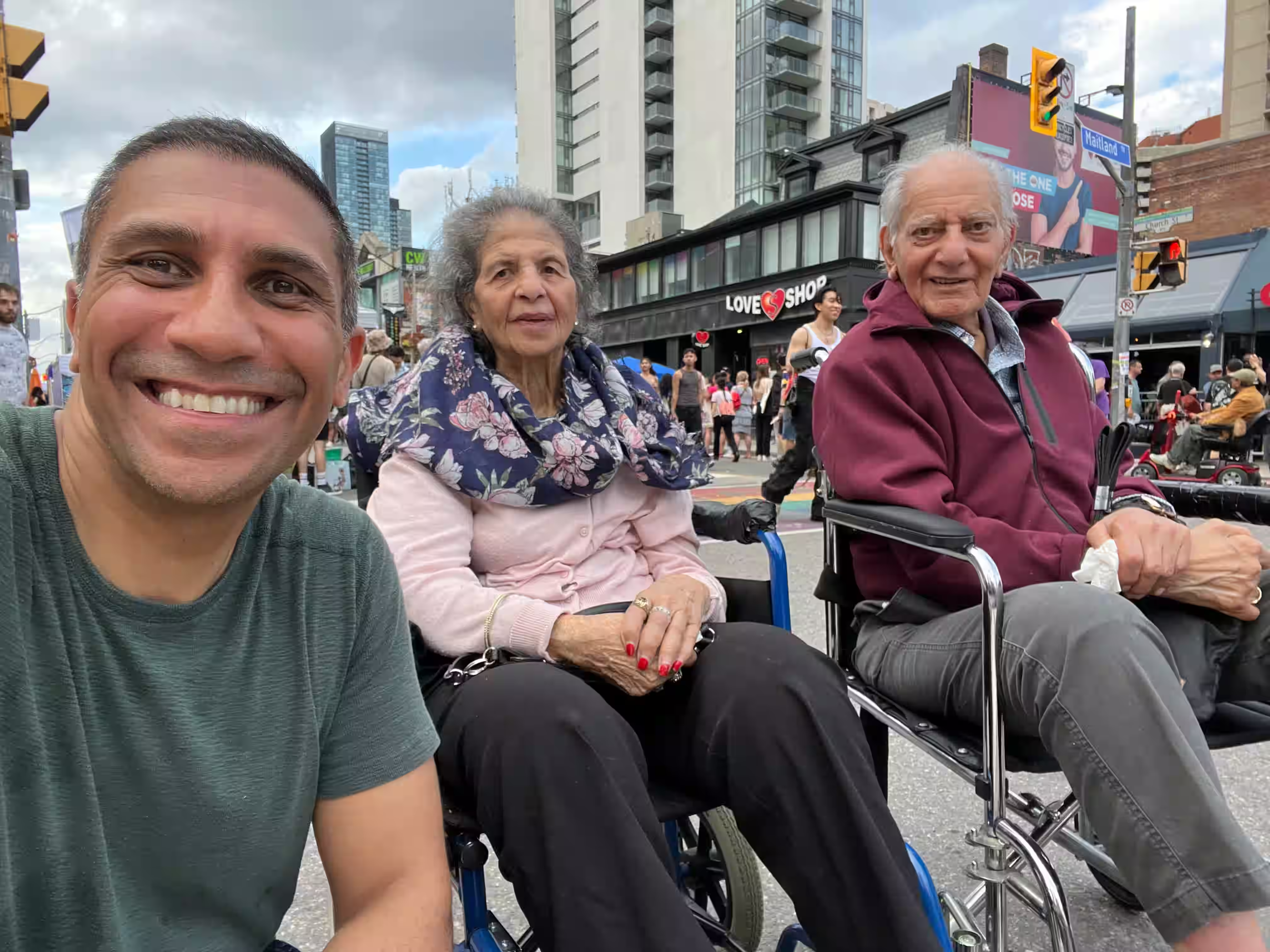
He took full responsibility for the logistics, including contractor coordination and the emotional task of clearing out years of belongings. He understood the profound impact of this change on his father, who had to trade his lifelong garden and garage for a simplified condo lifestyle.

Shen lived through this experience personally before he ever earned his official designation. This background allows him to provide families with genuine empathy and the practical support needed to manage the unique financial and emotional complexities of senior relocation.

When Shen’s mother was diagnosed with Alzheimer’s, his family had to make urgent decisions under immense pressure. While one parent was hospitalized, Shen managed the entire process of selling the family home and securing a condo with specialized around-the-clock care.

Know your options

Understanding Your Options in Toronto

The terminology overlaps, the costs vary significantly, and the wrong choice at this stage is expensive to reverse. Here is a plain-language breakdown of what exists in the Toronto market.

Standard Condo

Full ownership
Purchase the unit outright at market value. Own it, build equity, sell at any time. Monthly condo fees cover building maintenance and shared amenities. Most common choice for downsizers who want to stay in the city.

55+ Community

Age-restricted
Designed for seniors who want a lifestyle, not just a home. Often outside the city core. Formats include townhomes, bungalows, low-rise condos. Ownership models vary: freehold, condo, life lease, or land lease. No care services provided on-site.

Life Lease

Contractual occupancy
Large upfront payment to occupy a unit — but not ownership in the traditional sense. Governed by contract law, not the Condominium Act. Resale rights and exit terms vary significantly by property. Legal review before signing is essential.

Retirement Home

Rental + services
Licensed, privately operated residence combining housing with meals, housekeeping, and varying personal care. Regulated by the RHRA. Residents rent — they do not own. Right option when daily support is needed but long-term care is not yet required.

Independent Living

Senior-focused condo
Standard condo ownership within a building designed specifically for seniors. Optional services — meals, housekeeping, wellness — can be added without requiring a move. Combines ownership equity with senior-focused environment.

Long-Term Care

Government-funded
Government-funded facilities for seniors requiring ongoing medical supervision and daily care. Placement managed through Home and Community Care Support Services. Falls outside Shen's scope, but he connects families with the appropriate resources.

The conversation comes first

Shen helps clients understand which category fits their
situation before any listings are discussed.
Book a Strategy Session

What This Looks Like in Practice

Scenario A

Downsizing from a family home

A couple in their late 60s owns a detached home in Don Mills, purchased in 1991. They want to move to a two-bedroom condo in Bayview Village. Shen prices and sells the family home, coordinates staging and junk removal, and runs a parallel search for the replacement condo.
Sale closes at $1.4M. New condo: $750K. After costs, over $500K in freed equity — no capital gains tax owed under the Principal Residence Exemption. Transition: four months from first conversation to closing.
Scenario B

Adult children coordinating a move

Three siblings need to sell their mother's Scarborough home. She has recently moved into a retirement residence. One sibling is local; two are out of province. Disagreement about timing.
Shen meets with the family, provides a clear market analysis, and explains the cost of waiting versus the likely price difference. The family aligns on a timeline. Shen manages all communications through a single point of contact. Property sells in six weeks. Proceeds fund three additional years of retirement residence fees.
Scenario C

Time-sensitive sale under POA

A father has been hospitalized following a stroke. His adult daughter holds a Power of Attorney for Property. The family home needs to be sold to fund ongoing care. Shen reviews the POA documentation with the family, refers to an elder law lawyer to confirm the document will be accepted by the title company.
Once authority is confirmed: pricing assessment, light staging, professional photography, listing within two weeks. Property sells in 11 days. Proceeds fund the father's care placement.

See what clients are saying about Shen

See how easy the real estate process can be with a partner like Shen.

FAQ

Should we sell the family home before or after moving to a retirement residence?
Does selling the family home trigger capital gains tax?
What if my parent can no longer sign documents?
How long does the process typically take?
What if there is disagreement within the family about whether to sell?

Can I actually afford this neighbourhood long term?

Get started today

I’d love to help you take the next step – reach out for a chat and let’s make a plan that works for you.

Which Toronto neighbourhoods are a bad buy right now?